
Most cat owners find out about kidney disease too late. By the time the vet says something is wrong, the kidneys have often already lost more than half their ability to work. That is not the vet’s fault. It is just how this disease hides.
At Catmallow, we believe informed owners are the best advocates for their pets. This guide breaks down all four stages of cat kidney disease in plain language. It tells you what is happening inside your cat’s body, what symptoms to watch for at home, what treatment options exist at each stage, and most importantly the questions you need to ask your vet before leaving the exam room.
What Do Cat Kidneys Actually Do?
Before we talk about disease, it helps to understand what the kidneys are supposed to do. Think of them as your cat’s sophisticated, built-in water filtration and purification plant. Your cat has two kidneys, one on each side of the belly. Every day they:
- Filter waste out of the blood and send it out through urine
- Keep the right balance of water and salts in the body
- Help control blood pressure
- Make a hormone called erythropoietin that tells the body to produce red blood cells
- Help the body use vitamin D
When the kidneys start to fail, all of these jobs fall apart not just one. That is why kidney disease affects your cat from head to tail.
Why Is Cat Kidney Disease So Hard to Catch Early?
Here is the fact most vets do not say out loud in the exam room:
A cat’s kidneys have to lose about 75% of their working tissue before the standard blood test creatinine even goes above normal.
That means by the time a routine checkup picks up a problem, three-quarters of the kidney is already gone. This is not a flaw in your vet’s approach. It is a flaw in the traditional test. Which is exactly why the newer test, called SDMA, matters so much.
The Staging System Vets Use: IRIS
Vets around the world use a system from the International Renal Interest Society (IRIS) to classify how advanced kidney disease is in a cat. It works in two steps:
Step 1 — Stage the disease using blood values: creatinine and SDMA
Step 2 — Substage using two more checks: protein in the urine (UPC ratio) and blood pressure
One critical rule: staging is only accurate when the cat is stable and well hydrated. If your cat is dehydrated or sick on the test day, the numbers will look worse than they really are.
Ask your vet: “Is my cat hydrated enough today for the staging to be accurate?”
The Two Blood Tests That Tell You the Most
Creatinine
This is the traditional kidney marker. It has been used for decades. The problem is that it only rises when kidney function is already badly damaged roughly when 75% of the kidney is gone. It is also affected by how much muscle your cat has. A thin older cat can have a normal creatinine reading even while their kidneys are quietly failing.
SDMA
This is the newer test. SDMA rises when only about 25–40% of kidney function is lost meaning it can catch a problem months or even years earlier. It is not affected by muscle mass, so it gives a truer picture in older, thinner cats.
Ask your vet: “Are you running SDMA at every checkup, not just creatinine?” If the answer is no, ask why.
When these two tests point to different stages, IRIS says to use the worse of the two results. That is the safer approach.
Stage 1 Kidney Disease in Cats (The Hidden Stage)
Creatinine: Less than 1.6 mg/dL (looks normal on standard test)
SDMA: Less than 18 µg/dL
What is happening inside
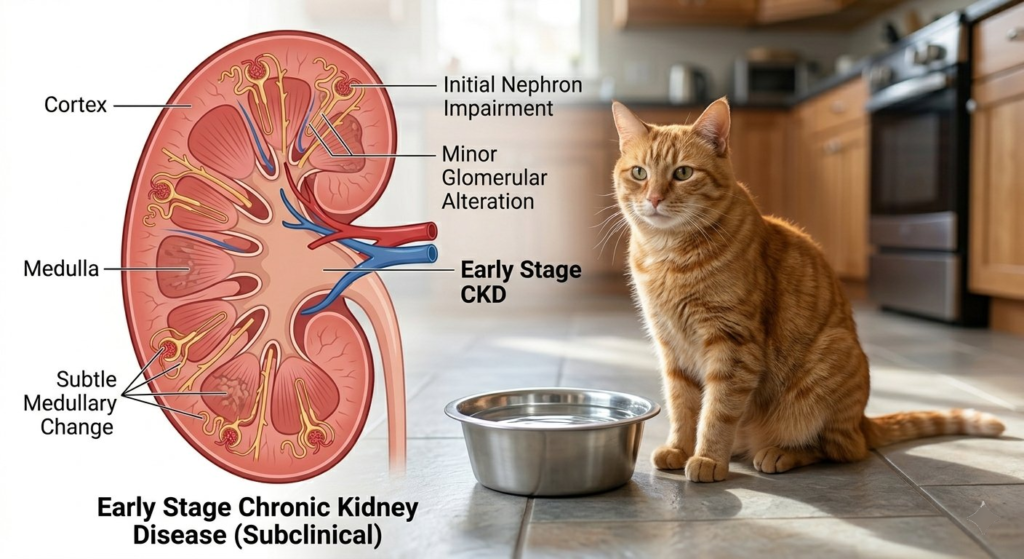
The kidneys are already damaged, but the blood test numbers look fine. Stage 1 is only found through other clues: urine that is too watery and dilute, protein showing up in the urine where it should not be, kidneys that look abnormal on an ultrasound, or blood markers that are slowly creeping upward over several tests.
How your cat looks and acts
Completely normal. Maybe a little thirstier than usual. Most owners would never suspect a thing.
What your vet probably will not say
This is the stage where treatment does the most good. With the right care, some cats can actually improve moving from a higher stage back down to a lower one. That is clinically documented but rarely mentioned unless you ask.
Treatment at Stage 1
- Keep fresh water available at all times hydration is the most important thing you can do
- If your cat gets ill and stops drinking, fix the dehydration right away
- If blood pressure is high, your vet may prescribe amlodipine or telmisartan with a goal of keeping it below 160 mmHg systolic
- If protein is leaking into the urine, a prescription renal diet and possibly a RAAS or ACE inhibitor medication may be recommended
On diet: Not every Stage 1 cat needs a prescription kidney diet straight away. The decision depends on urine protein levels, blood phosphorus, and what your cat will actually eat. Sometimes a high-quality senior food is the better short-term choice. Never switch your cat’s food without talking to your vet first.
Monitoring Schedule at Stage 1
| What to monitor | How often |
| Full vet exam | Every 3 months |
| Blood pressure and urine protein | Every 3–6 months |
| Blood chemistry panel | Every 3–6 months |
| At home | Daily watch for reduced appetite, more drinking, more litter box visits, vomiting, or tiredness |
Stage 2 Kidney Disease in Cats (Where Most Cats Are First Diagnosed)
Creatinine: 1.6–2.8 mg/dL
SDMA: 18–25 µg/dL
Waste products are starting to build up in the blood. The kidneys are working harder but not keeping up. For example, a key waste product called urea begins to accumulate, which can lead to mild nausea or a slightly decreased appetite. Urine gets more watery as the ability to concentrate it goes down—this is why increased thirst is a primary symptom.
Many cats at Stage 2 look completely fine. The most common signs are drinking more water and going to the litter box more often things most owners chalk up to normal aging. Blood pressure may be starting to rise too.
Stage 2 is the most important stage to act on. Cats treated at Stage 2 with a prescription kidney diet live two to three times longer on average than cats eating regular food. The window to slow this disease is widest right here.
Ask your vet plainly: “How long can my cat live at this stage if we treat it properly versus doing nothing different?”
Treatment at Stage 2
- Prescription renal diet: Low in protein, phosphorus, and sodium. High in omega-3 fatty acids and antioxidants. Comes in wet and dry forms. Switch gradually — change food type or brand slowly over several weeks to avoid your cat refusing it entirely. Understanding the basics of feline diet is crucial, and our complete cat nutrition guide can help.
- Phosphorus binders: If blood phosphorus is high, these stop the gut from absorbing too much
- Blood pressure medication: If systolic blood pressure stays above 160 mmHg
- More water intake: Wet food, cat water fountains, multiple bowls around the house
Monitoring at Stage 2
Recheck every 3–6 months. Do not skip appointments, Stage 2 can slide into Stage 3 without any obvious warning signs.
Stage 3 Kidney Disease in Cats (When You Can See It)
Creatinine: 2.9–5.0 mg/dL
SDMA: 26–38 µg/dL
Kidney function has dropped significantly. Toxins are building up fast enough to start affecting other organs. The kidneys are making less erythropoietin, so red blood cell production drops causing anemia. Blood pressure problems and protein loss in urine are both common now.
This is when owners really start to worry. Common signs include:
- Noticeable weight loss
- Eating much less or refusing food completely
- Vomiting, sometimes daily
- Looking exhausted and not wanting to move
- Dry, dull, or matted fur
- Becoming withdrawn or unusually grumpy
- Pale or white gums from anemia
About 60% of cats with kidney disease will develop high blood pressure. If your vet is not checking blood pressure at every single recheck, ask for it specifically. High blood pressure in a kidney disease cat does not just hurt the kidneys more it can cause sudden blindness, confusion, and serious heart problems with very little warning.
Also ask about anemia treatment. There is now an oral medication called molidustat that stimulates red blood cell production in CKD cats. It is newer and not every vet brings it up automatically. It only works when blood pressure is also under control but it is worth asking about.
Treatment at Stage 3
- Subcutaneous fluids (fluids given under the skin): Often given at home every 1–3 days. Your vet can teach you to do this. It sounds scary but most owners get the hang of it quickly. It makes a real difference in how the cat feels day to day
- Anti-nausea medicine: Cerenia is commonly used
- Appetite stimulants: Mirtazapine helps cats that have stopped eating
- Antacids: Famotidine for stomach discomfort
- Blood pressure medication: Telmisartan in liquid form is FDA-approved for cats
- Phosphorus binders: More important now than at earlier stages
- Potassium supplements: CKD cats lose potassium faster than normal
- Pain management: If joint issues or general discomfort are present
- Anemia treatment: Molidustat (oral tablet) or darbepoetin (injection)
Monitoring at Stage 3
Recheck every 2–3 months. If your cat’s vomiting increases, eating stops, or behavior changes noticeably call the vet before the next scheduled visit.
Stage 4 Kidney Disease in Cats (Keeping Your Cat Comfortable)
Creatinine: Above 5.0 mg/dL
SDMA: Above 38 µg/dL
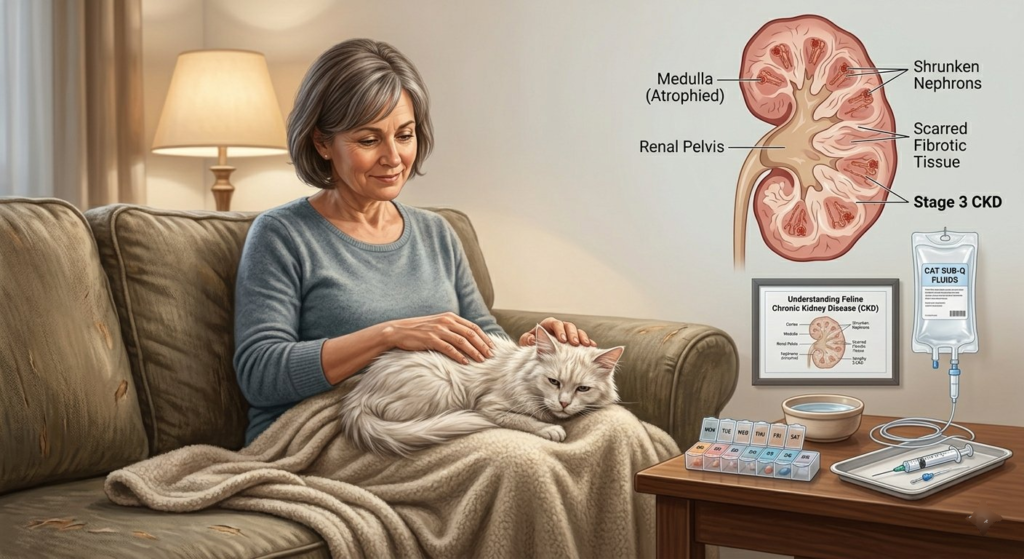
The kidneys can no longer filter waste at any meaningful level. Toxins flood the bloodstream and start damaging multiple organs at once. Bones can weaken and become fragile. In younger cats, the jaw bones can become so brittle that teeth begin to fall out.
Stage 4 brings the most serious signs:
- Vomiting very frequently
- Not eating at all or barely touching food
- Dramatic weight loss ribs and spine visible
- Extreme tiredness barely moving from one spot
- Breath that smells like ammonia or something chemical
- Confusion, pacing, or restlessness
- Accidents outside the litter box
- Body temperature dropping lower than normal
- Seizures in the most severe cases
Average survival at Stage 4 is less than six months. But with good palliative care, many cats can still have weeks or months of comfortable daily life.
Ask your vet directly: “What does a good day look like for my cat right now and what will tell me when it is time?“
This is one of the most important conversations you can have, and most vets wait for the owner to bring it up. Do not wait until you are in the middle of a crisis. Ask while you have space to think clearly and make a calm, informed decision.
Also ask about hemodialysis (a blood-filtering machine) and kidney transplantation. These are rare, expensive, and require specialist referral. They are not a cure and have not been fully proven in controlled studies. But they are options that exist, and you have the right to know about them before deciding they are not for you.
Treatment at Stage 4
- Daily subcutaneous fluids: Needed every day in many cases to flush toxins and prevent dehydration
- Anti-nausea and anti-vomiting medication
- Appetite stimulants
- Pain relief: Comfort is the main goal at this point
- Highly restricted protein diet with extra supplements
- Feeding tube: May be placed during hospitalization if the cat has completely stopped eating
- IV fluids in clinic: During severe flare-ups
- End-of-life planning: A calm honest conversation with your vet about humane euthanasia when to consider it, what it involves, and what to do if your cat deteriorates overnight or on a weekend
Monitoring at Stage 4
Every 1–2 months, or sooner if symptoms change suddenly.
The Two Substages Most Cat Owners Never Hear About
Beyond the main stage number, every CKD cat is also checked on two more things. These substages affect both treatment choices and how long your cat is likely to live. For instance, a cat in Stage 2 with high blood pressure and significant protein in their urine (proteinuric and hypertensive) has a more guarded prognosis and requires more aggressive treatment—like blood pressure medication—than a Stage 2 cat with normal readings.
1. Urine Protein (The UPC Ratio)
Protein should not be leaking out in large amounts through urine. When it is, it means the kidney filters are breaking down further and it speeds up the disease.
| UPC Result | What It Means |
| Below 0.2 | Normal, no concerning protein loss |
| 0.2 to 0.4 | Borderline watch closely |
| Above 0.4 | Too much protein leaking, treatment needed |
To confirm this, vets need two urine samples at least two weeks apart showing the same result. If your cat has too much protein in the urine, ask about ACE inhibitors or ARB medications to help reduce it.
2. Blood Pressure
| Systolic Reading | Category |
| Below 140 mmHg | Normal |
| 140–159 mmHg | Prehypertensive (monitor closely) |
| 160–179 mmHg | High treatment usually started |
| 180 mmHg or above | Dangerously high treat right away |
Blood pressure must be taken in a quiet room after the cat has settled down. A stressed cat in a noisy clinic will always read high. If your cat gets anxious at the vet, ask if the reading can be taken after a few quiet minutes in a separate room.
What You Can Do at Home Every Single Day
No matter what stage your cat is at, daily home care plays a real role in how they feel and how long they live.
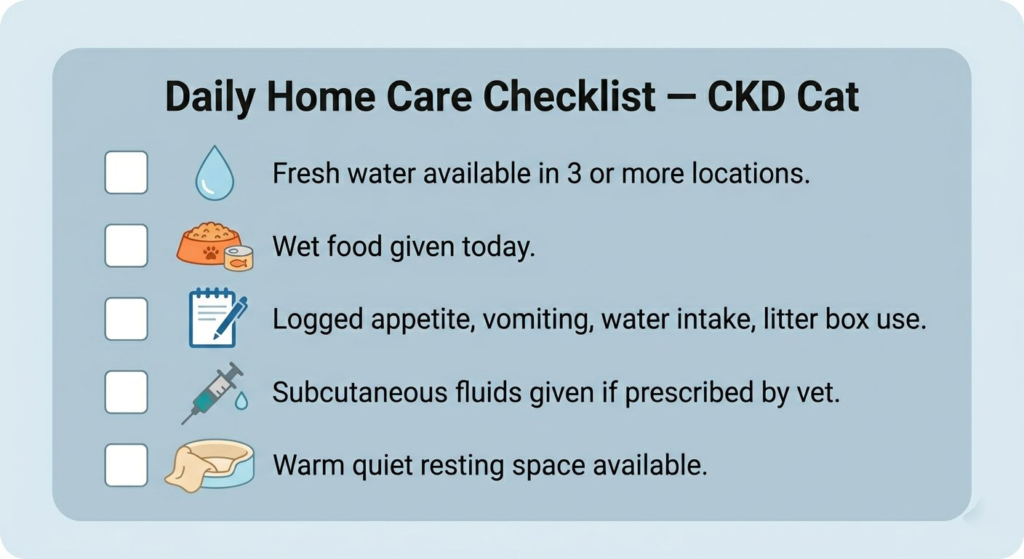
Keep water everywhere. Dehydration is one of the fastest ways kidney disease gets worse. Put water bowls in multiple rooms. Try a cat water fountain many cats prefer moving water. Feed wet food over dry whenever you can.
Write things down. Keep a simple daily log: how much did your cat eat, did they vomit, how much did they drink, did they use the litter box, how active were they. Bring this to every vet visit. It helps your vet spot trends that a single exam cannot catch. Note any other symptoms, even if they seem unrelated, such as why your cat is sneezing so much, as this can help your vet get a complete health profile.
Learn to give subcutaneous fluids. This sounds intimidating but thousands of cat owners do it every week at home. Your vet will show you how. It takes about ten minutes and can dramatically improve your cat’s energy and comfort in Stage 3 and 4.
Keep the environment warm and calm. A cat with kidney disease gets cold and tired more easily than a healthy cat. A warm bed in a quiet spot makes a genuine difference. Pay attention to their behavior for signs of discomfort or stress. Understanding common behaviors, like why a cat licks you, can help you distinguish between normal affection and a potential sign of anxiety.
Never add anything new without checking first. Some supplements, human medications, and even certain cat treats put extra strain on damaged kidneys. Always ask your vet before adding anything new to your cat’s routine.
Questions to Write Down Before Your Cat’s Next Vet Visit
Bring this list with you:
- Are you running SDMA at every checkup — not just creatinine?
- Is my cat hydrated enough today for the staging result to be accurate?
- What is my cat’s current UPC ratio and blood pressure substage?
- When do you recommend starting a prescription renal diet, and which one suits my cat best?
- Should we start subcutaneous fluids at home? Can you teach me how to give them?
- Does my cat show any early signs of anemia or high blood pressure right now?
- How often do we need to recheck, and what changes at home should make me call sooner?
- At my cat’s current stage, what does a good quality of life look like — and what signs would tell me that is starting to change?
All 4 Stages at a Glance
Navigating the different stages of chronic kidney disease can feel overwhelming. This summary table provides a clear, at-a-glance comparison of the key markers, symptoms, and management goals for each of the four IRIS stages. Use this as a quick reference to understand where your cat is and what to expect as you partner with your vet on their care plan.
| Stage 1 | Stage 2 | Stage 3 | Stage 4 | |
|---|---|---|---|---|
| Creatinine | Below 1.6 | 1.6–2.8 | 2.9–5.0 | Above 5.0 |
| SDMA | Below 18 | 18–25 | 26–38 | Above 38 |
| Cat looks sick? | No | Usually no | Yes | Yes, severely |
| Average survival | Years with care | 2–3 years | Varies | Under 6 months |
| Main goal | Monitor and slow | Slow progression | Manage symptoms | Comfort first |
| Recheck frequency | Every 3–6 months | Every 3–6 months | Every 2–3 months | Every 1–2 months |
The Bottom Line
Kidney disease in cats is not a sudden death sentence. It is a slow-moving condition that, when caught at the right time, can be managed for years.
The difference between a cat that lives comfortably for another two or three years and one that declines quickly is often just this: someone asked the right questions early enough.
You do not need to be a vet to be a good advocate for your cat. You just need to know what to ask. Ask about SDMA. Ask about blood pressure. Ask about the UPC ratio. Show up to every recheck. Keep your cat hydrated. Do not wait for the vet to bring things up bring them up yourself.
Your cat cannot speak for themselves. You can.
Key Takeaways for Cat Owners
Facing a diagnosis of chronic kidney disease is tough, but knowledge is power. Here are the most critical points to remember:
- Early Detection is Key: Insist on an annual SDMA test for any cat over 7 years old. It can detect kidney disease months or years earlier than traditional tests.
- Staging is More Than One Number: A cat’s stage isn’t just about creatinine. Ask your vet for the IRIS stage, blood pressure substage, and urine protein (UPC) substage for a complete picture.
- You are Your Cat’s Advocate: Proactive management, including diet, hydration, and regular monitoring, can significantly extend your cat’s quality of life. Don’t be afraid to ask questions and be an active partner in your cat’s care.
For more expert advice on proactive pet parenting, explore our other cat care guides.