
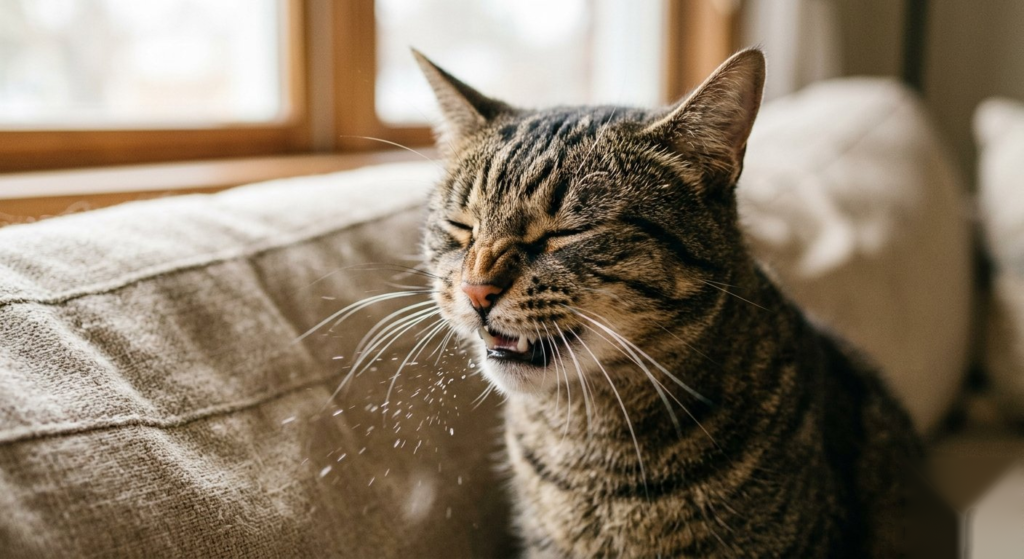
If your cat sneezes once or twice, that is completely normal. The nose is doing its job forcing out dust, pollen, or any tiny particle that does not belong there. Nothing to worry about.
But when the sneezing keeps going day after day, or paired with runny eyes, thick discharge, or a cat that does not want to eat something else is happening. That is when pet owners need answers.
This guide walks through the 11 causes vets look at first when a cat will not stop sneezing. Everything is written in plain language, so you do not need a medical background to understand it. By the end, you will know what each cause looks like, when to call your vet, and what you can do at home to help.
Quick Answer (for voice assistants & AI summaries)
The most common reasons a cat sneezes a lot are: viral upper respiratory infections (especially feline herpesvirus), bacterial infections, environmental irritants like dust or smoke, allergies, and dental disease. Rare causes include nasal tumors, fungal infections, and foreign objects stuck in the nose. See a vet if sneezing lasts more than a few days or is paired with colored discharge, loss of appetite, or lethargy.
First: Is Your Cat Actually Sneezing?
This sounds like a silly question but it matters a lot. A cat sneeze can look very similar to several other things that have completely different causes. Vets see this mix-up often.
Things that are not a sneeze but look like one:
- Reverse sneezing a loud, honking inhale through the nose. More common in dogs, but cats do it too.
- Coughing comes from the chest, not the nose.
- Gagging or retching often paired with neck stretching.
- Wheezing a whistling sound that points to the lungs or lower airways.
- Hiccuping rhythmic and involves the whole body.
Each of these has its own set of causes and treatments. Getting the diagnosis right starts with knowing what you actually saw.
Vet Tip :
Film a short video on your phone the next time it happens. Show it to your vet at the appointment. This one step saves time and often money because the vet can confirm what action is really occurring before running tests.
The 11 Causes Vets Check First
1. Feline Herpesvirus
If a vet had to guess the most likely cause before running any tests, this would be it. Feline herpesvirus is responsible for the majority of persistent sneezing in cats and the numbers are striking. Roughly 80 to 90% of all cats carry it.
The virus sits quietly in the cat’s nervous system most of the time. The problem is stress. A new pet in the home, a house move, loud construction nearby, even moving the furniture around any of these can trigger a flare-up. The cat starts sneezing, develops a runny nose and watery eyes, and looks much like a human with a bad cold.
The tricky part: the cat may recover completely, seem fine for months, and then flare again next time something stressful happens. There is no cure. But antiviral medications and L-lysine supplements can shorten outbreaks and reduce their severity. Vaccination (the FVRCP vaccine) also helps prevent severe episodes.
What it looks like:
Sneezing with clear or slightly cloudy nasal discharge, watery eyes, mild tiredness, slightly off food. Looks like a human cold. May come and go over months or years.
2. Secondary Bacterial Infection
Bacteria almost never start the problem on their own. What usually happens is this: a virus (like herpesvirus) weakens the lining of the cat’s nose, and bacteria take advantage of the opening. The sneezing was already there the bacterial infection just makes it worse.
Common bacteria involved include Bordetella, Mycoplasma, and Chlamydia. The good news is that antibiotics work well here. Most cats feel noticeably better within a few days of starting treatment.
What it looks like:
The key sign is the color of the nasal discharge. Clear = likely viral. Thick yellow, green, or brownish discharge = bacterial infection is involved.
3. Fungal Infection
Less common than viral or bacterial infections, but it does happen. The fungus most often involved is called Cryptococcus. It lives in the environment soil, decomposing plants and can enter a cat’s nasal passage and grow there, forming irritating plaques.
A regular physical exam cannot confirm this. The vet usually needs to look inside the nose directly (rhinoscopy) or take a tissue sample (biopsy). Treatment involves antifungal medications taken by mouth, sometimes combined with nasal rinses or surgery in more serious cases.
What it looks like:
Persistent sneezing with discharge. Sometimes a lump or swelling visible on or around the nose. Does not improve with antibiotics.
4. Chronic Rhinitis (When the Sneezing Never Fully Stops)
Imagine the original infection has cleared up and been treated but the sneezing never fully went away. That is chronic rhinitis.
Here is what happens: repeated infections, especially in kittens, can permanently damage tiny structures inside the nose called turbinates. Once damaged, these structures cause ongoing inflammation. The inflammation irritates the nose. The nose sneezes. The sneezing irritates the nose further. The cycle repeats indefinitely.
This is not a death sentence for a cat most do well but it often becomes a permanent condition that is managed rather than cured. Steroids, anti-inflammatory drugs, and periodic nasal flushing under anesthesia are the main tools.
What it looks like:
Ongoing or returning sneezing in a cat that has had respiratory infections before. Often with mild discharge. The cat is otherwise healthy but never quite clears up completely.
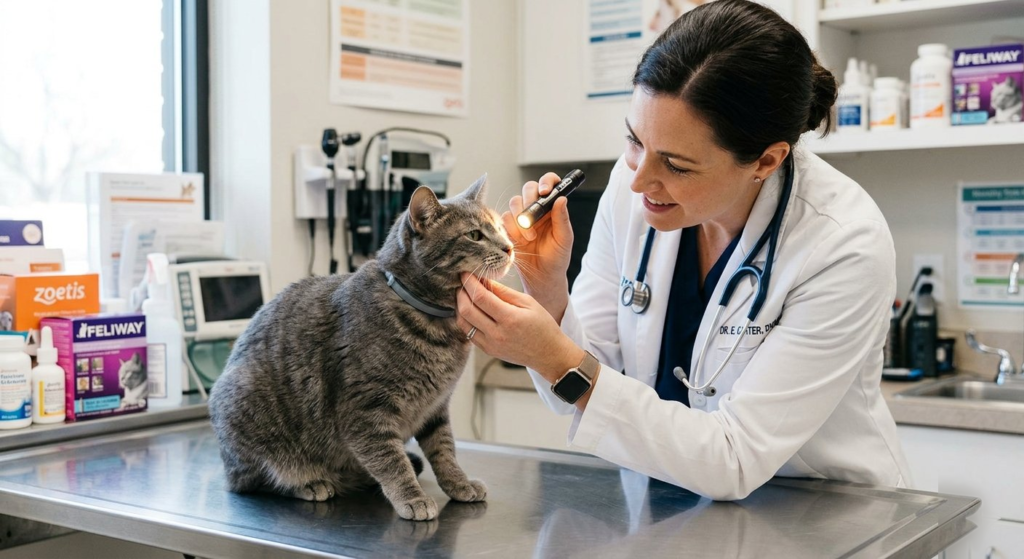
5. Environmental Allergies
Yes, cats get hay fever too sort of. They are less prone to it than humans, but pollen, dust, mould spores, and grass can all trigger sneezing in sensitive cats.
Here is something many cat owners do not realize: being an indoor cat does not fully protect against outdoor allergens. Pollen and dust drift inside every time a door or window opens. Outdoor cats can also bring allergens in on their fur.
Allergies are trickier to pin down than infections. Seasonal patterns help if your cat sneezes more in spring or summer, that points to pollen. Tests exist but are not always accurate, and it can take months of careful observation to identify the trigger. Treatment usually involves removing the allergen, using antihistamines, or trying anti-inflammatory medications.
What it looks like:
Sneezing with watery eyes, itching, or skin irritation. Often seasonal. Cat otherwise seems well, no fever or colored discharge.
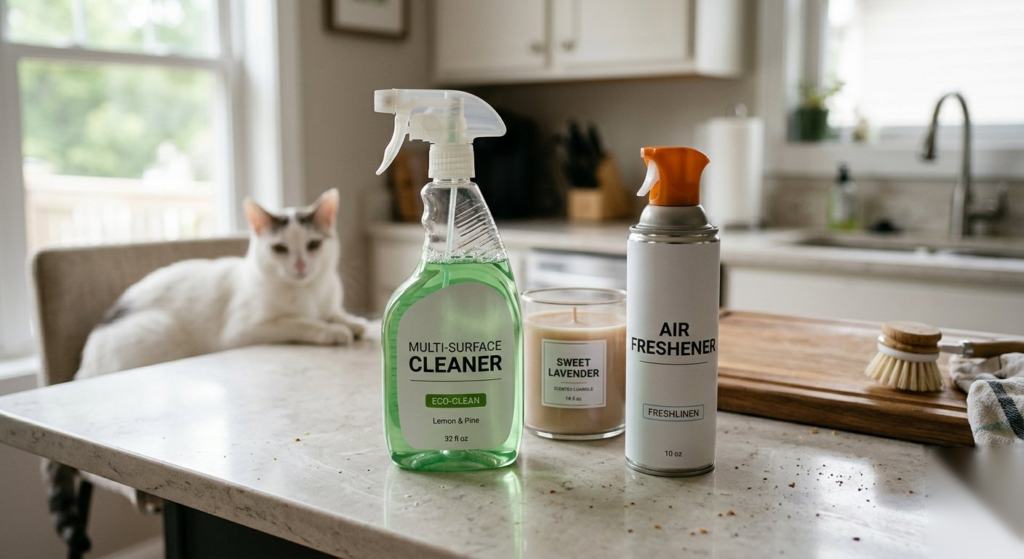
6. Household Irritants (Smoke, Sprays, and Strong Smells)
This is one of the most overlooked causes and one of the easiest to fix. Cats have noses far more sensitive than ours, and many things we barely notice can make them sneeze repeatedly.
Common culprits include:
- Cigarette or vape smoke
- Air fresheners and plug-in diffusers
- Strong cleaning products
- Scented candles
- Perfume or hairspray used nearby
- Pine-based cat litter or cleaning sprays
Cigarette smoke deserves extra attention. Research has shown that cats and dogs living in smoking households have higher rates of asthma and in cats specifically nasal and lung cancers. If you smoke, doing it away from your cat makes a real difference to their health.
What it looks like:
Sneezing starts soon after a product is used or a room is entered. No discharge, no fever, no other symptoms. Cat is fine once the irritant clears.
7. Something Stuck in the Nose
Cats are curious animals that sniff everything at ground level. Sometimes a blade of grass, a piece of plant material, a dust clump, or even a bit of cat litter gets inhaled and lodges in the nasal passage.
For small particles, sneezing usually clears it. For anything larger, sneezing does not work the object stays, causing constant irritation and repeated sneezing episodes.
Do Not Try This at Home:
Never attempt to remove a foreign object from your cat’s nose yourself. Do not try to make them sneeze harder either. Both approaches can drive the object deeper or cause bleeding. Your vet can safely remove it using a nasal flush or rhinoscopy while the cat is under light anesthesia.
What it looks like:
Sudden, intense sneezing that starts abruptly often after the cat has been outside or digging in plants. Cat may paw at their face. No other illness signs.
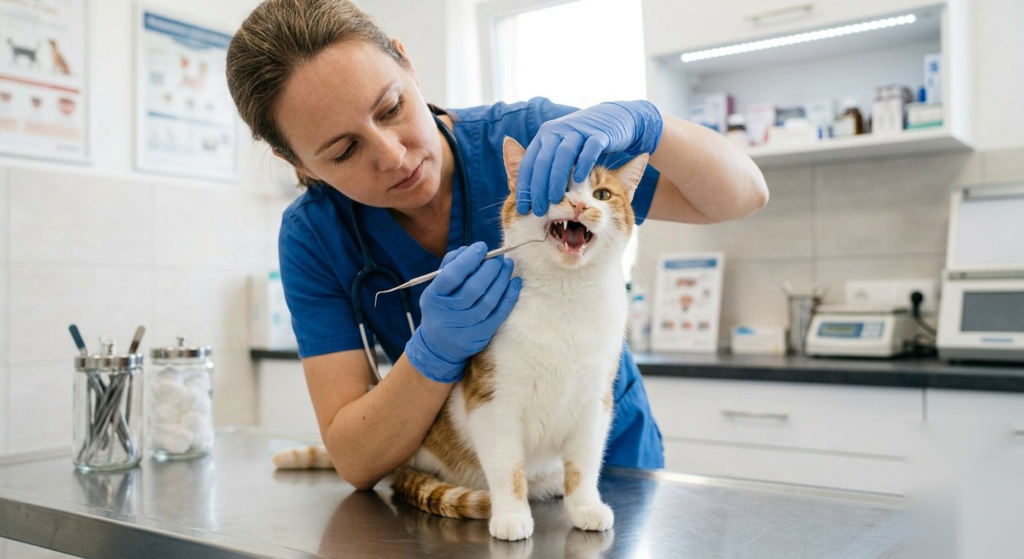
8. Dental Disease
This one surprises most cat owners when they hear it. What does a tooth have to do with sneezing?
The answer is anatomy. The roots of a cat’s upper back teeth sit directly next to the nasal passages there is only a thin wall of tissue between them. When a tooth root becomes badly infected, that wall can break down. Food, fluid, and bacteria can then travel up into the nose.
The result is a cat that sneezes often during meals or right after eating. Treating the dental problem (usually an extraction or a root treatment) typically stops the sneezing completely.
Prevention is straightforward: brush your cat’s teeth regularly with cat-safe toothpaste, and ask your vet about professional dental cleanings.
What it looks like:
Sneezing that happens around mealtimes. Bad breath. Pawing at the mouth or chin. Sometimes visible redness or swelling on the gum line.
9. Nasal Tumors
This is the cause no one wants to hear about, but it is important to mention especially for older cats.
Tumors can grow inside the nasal passages or sinuses. As they get larger, they block airflow and cause ongoing inflammation, leading to persistent sneezing. They often produce discharge from the nose and, in more advanced cases, nosebleeds. The cat may also lose weight and seem generally unwell.
Nasal tumors are not common, but they are the reason vets become more thorough when an older cat has chronic sneezing that does not respond to standard treatment. Diagnosis is via CT scan, rhinoscopy, or biopsy.
What it looks like:
In older cats: persistent sneezing that gets worse over time, bloody or one-sided nasal discharge, possible facial swelling, weight loss. Does not improve with antibiotics or antivirals.
10. Cat Flu
Cat flu is not one disease it is the name for a group of upper respiratory illnesses that share similar symptoms. Most cases involve feline herpesvirus, calicivirus, or a bacterial co-infection. It spreads easily between cats through sneezing and coughing, making multi-cat homes and shelters high-risk environments.
Who is most at risk: kittens, older cats, and cats with weakened immune systems. Cats adopted from shelters are especially prone, since shelters are where respiratory viruses spread most easily.
There is no cure, but most cats recover within one to two weeks with good supportive care keeping them warm, comfortable, hydrated, and eating. Vaccination reduces how severe the illness gets, even if it cannot always prevent infection entirely.
What it looks like:
Multiple symptoms at once: sneezing, coughing, runny eyes and nose, drooling, fever, tiredness, reduced appetite. Looks like a really bad cold.
11. COVID-19 (Rare, but Worth Knowing)
In rare cases, cats can catch COVID-19 from their owners. Sneezing can be one of the symptoms. However, the vast majority of cats who contract it have very mild symptoms or none at all, and recover quickly on their own.
The risk of a cat passing COVID-19 to a human is considered very low. If you have COVID-19 and are concerned, limit close contact with your cat while you are ill. If you are worried about your cat’s health, your vet can advise.
What it looks like:
Mild sneezing or cold-like symptoms in a cat whose owner recently had COVID-19. Typically self-resolving.
When to Call Your Vet
A single sneeze, or even a short burst of sneezes, is almost always nothing to worry about. But get your vet on the phone if you notice any of the following:
- Sneezing that carries on for more than two or three days
- Thick nasal discharge yellow, green, brown, or bloody
- Coughing, wheezing, or any sign of breathing difficulty
- Watery or red eyes alongside the sneezing
- The cat is not eating or is losing weight
- The cat is unusually tired, hiding, or not acting like themselves
- Blood comes out during a sneeze call the vet the same day
- Bad breath or pawing at the mouth (possible dental cause)
- Sneezing happens consistently around mealtimes
General Rule:
If the sneezing is paired with even one other symptom from this list, it is always worth a vet visit. The causes range from easily treatable to serious, and many look similar from the outside. Early treatment means faster relief for your cat.
How Vets Figure Out the Cause
There is no single test that tells a vet exactly why a cat is sneezing. Instead, they build a picture using several tools:
- Physical exam checks the nose, eyes, throat, lymph nodes, and teeth
- Dental exam always included, since dental disease is a common and overlooked cause
- X-rays useful starting point; shows damage to nasal structures
- CT scan the gold standard for imaging the nasal passage; requires anesthesia
- Rhinoscopy a small camera passed into the nose under anesthesia to see inside directly
- Nasal biopsy tissue sample taken during rhinoscopy to check for tumors, fungi, or inflammation
- Nasal lavage flushing the nasal passages with sterile fluid under anesthesia; diagnostic and therapeutic
- Treatment trial sometimes the response to a course of antibiotics or antivirals is itself the most informative test
One important note:
Testing the nose for bacteria or viruses is usually not helpful. Many organisms naturally live in the nasal passages without causing problems. Finding them does not prove they are the cause.
What You Can Do at Home
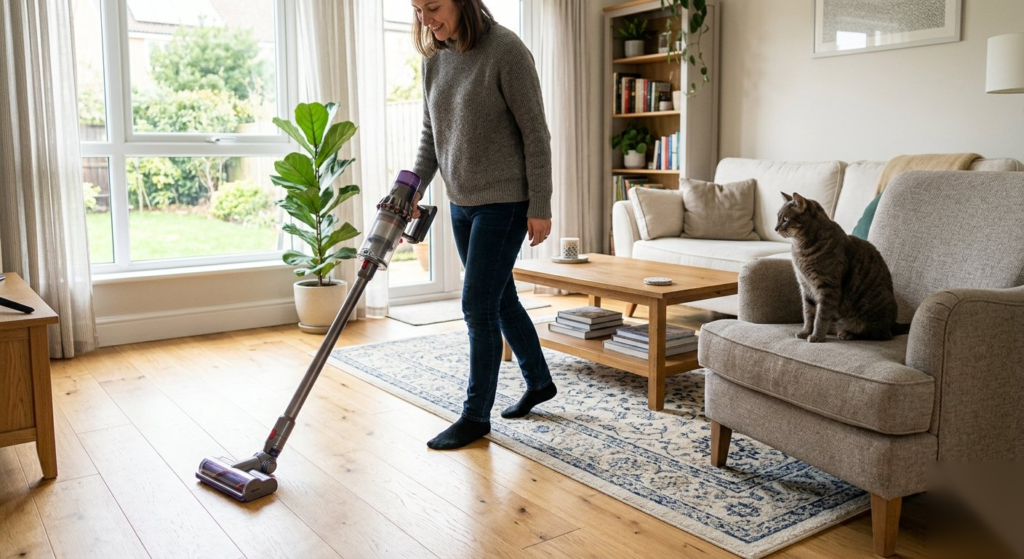
Home treatment is no substitute for a vet visit when one is needed but there is quite a lot you can do to reduce sneezing caused by allergens, irritants, and stress.
- Reduce allergens in the air keep windows closed on high-pollen days; consider a HEPA air purifier
- Switch to unscented products replace scented cleaning products, candles, and plug-in air fresheners
- Groom your cat regularly brushing removes pollen and dust that has stuck to the fur, especially after outdoor time
- Bathe outdoor cats occasionally a bath removes allergens that brushing alone cannot
- Clean your home more often vacuuming, damp dusting, and washing pet bedding cuts down dust significantly
- Reduce household stress for herpesvirus cats, a calm, stable home is one of the most effective tools to prevent flare-ups
- Keep vaccinations up to date the FVRCP vaccine protects against the most common causes of cat sneezing
- Brush your cat’s teeth regular brushing prevents the dental disease that leads to nasal symptoms
Frequently Asked Questions
Can cat sneezing spread to humans?
The common causes of cat sneezing including cat flu cannot be passed to humans. In very rare cases some cat infections can theoretically affect people, but this is extremely uncommon. If an unknown cat sneezes on you, wash the area with soap and water. See a doctor if you feel unwell afterward.
Is my indoor cat safe from allergens?
Not entirely. Pollen, mould spores, and dust come inside every time a door or window opens. Indoor-outdoor cats also carry allergens in on their fur. Being indoors reduces exposure but does not eliminate it.
Can I give my cat human allergy medicine?
No, not without veterinary guidance. Some human antihistamines are used in cats, but the doses are completely different and certain ingredients found in human medications (like decongestants) can be toxic to cats. Always ask your vet before giving any human medicine to a cat.
Why does my cat sneeze more during or after eating?
This is a strong sign of dental disease. The roots of the upper teeth sit right next to the nasal passages. A tooth infection can break down the barrier between the two, allowing food and fluids to enter the nose and trigger sneezing. A dental exam by your vet will confirm this.
My cat had a respiratory infection that was treated why is it still sneezing?
This points to chronic rhinitis. Repeated infections can permanently damage the structures inside the nose, leading to ongoing inflammation and sneezing even after the original infection is gone. This is a manageable condition, your vet can discuss long-term treatment options.
Do allergen tests for cats actually work?
They exist, but they are not always reliable. Finding the specific allergen causing your cat’s sneezing often comes down to careful observation over time noting when the sneezing is worse, what season it occurs in, and what environmental changes seem to trigger it. Your vet can help guide this process.
Quick Reference: All 11 Causes at a Glance
| Cause | Key Sign | Needs Vet? |
| Herpesvirus | Watery discharge, watery eyes, comes and goes | Yes |
| Bacterial infection | Yellow/green thick discharge | Yes, antibiotics |
| Fungal infection | Swelling near nose, no improvement on antibiotics | Yes, biopsy needed |
| Chronic rhinitis | Never fully clears up, ongoing mild discharge | Yes, long-term plan |
| Environmental allergies | Seasonal, watery eyes, itching | Yes if persistent |
| Household irritants | Stops when product is removed | No (remove irritant) |
| Foreign object | Sudden onset, pawing at face | Yes, do not DIY |
| Dental disease | Sneezes around mealtimes, bad breath | Yes, dental exam |
| Nasal tumor | Older cat, bloody discharge, worsening | Yes, urgent |
| Cat flu | Multiple symptoms, fever, lethargy | Yes |
| COVID-19 | Owner had COVID-19, mild symptoms | Consult vet |
The Bottom Line
Most cat sneezing is harmless. A tickle in the nose, a bit of dust, a passing virus these things resolve on their own. But if the sneezing keeps going, or comes with discharge, tiredness, or a change in eating habits, it deserves attention.
The good news is that the most common causes herpesvirus, bacterial co-infections, and environmental irritants are well understood and very treatable. Catching them early means faster relief for your cat and less worry for you.
When in doubt:
film it, note the symptoms, and call your vet. That is all it takes to get started.