Have you ever wondered how show cats get those impossibly perfect, flowing coats? Achieving that level of polish goes beyond a simple brushing session. It requires a combination of superior nutrition, the right professional tools, and a mastery of specific techniques that protect your cat’s skin and fur. With the right approach, you can elevate your grooming routine and bring out the absolute best in your cat’s coat.
To get a show-quality coat, you need to focus on three key areas: internal health through a high-quality diet, an arsenal of professional-grade grooming tools tailored to your cat’s fur type, and a consistent, multi-step grooming process. This includes proper bathing, drying, and finishing methods that enhance shine and texture while preventing mats and skin irritation. These advanced cat grooming tips for a show quality coat will guide you through the process from start to finish.
Foundations for a Show-Ready Coat: Diet and Health
The secret to a truly spectacular coat begins from within. No amount of brushing or expensive shampoo can compensate for a poor diet. A cat’s fur is primarily made of protein, so a diet rich in high-quality, digestible animal protein is the non-negotiable foundation. This provides the essential building blocks for strong, resilient hair follicles and vibrant fur. Look for foods where a named meat source, like chicken or salmon, is the first ingredient.
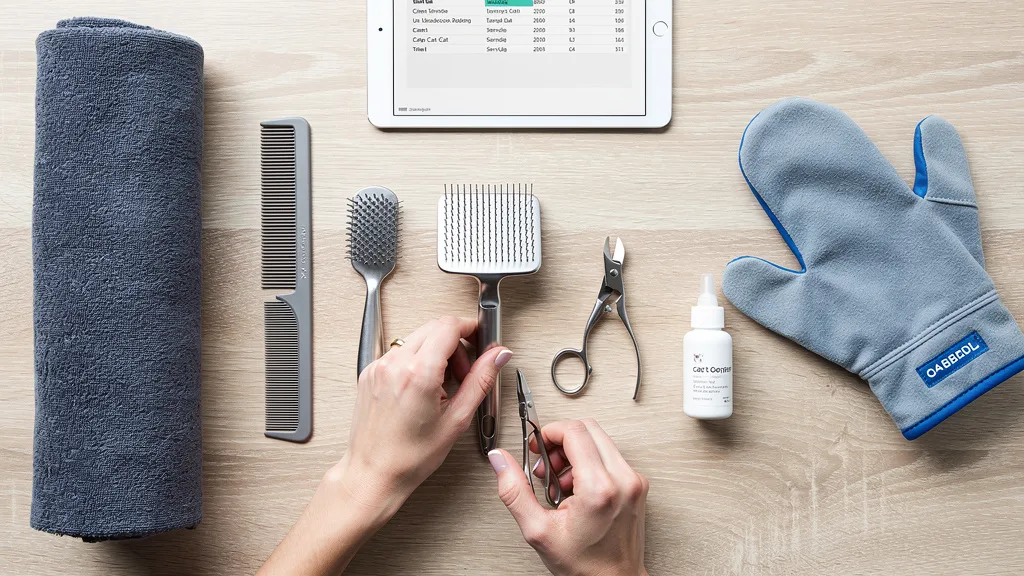
The right tools are essential for safe and effective cat grooming.
Beyond protein, omega-3 and omega-6 fatty acids are critical for skin and coat health. These fats, often found in fish oil, help maintain skin hydration, reduce inflammation, and give the coat a brilliant shine. Proper hydration is also key, so ensure your cat has constant access to fresh water, and consider incorporating wet food into their diet. For a deeper dive into your cat’s nutritional needs, our complete cat nutrition guide provides a comprehensive overview.
Finally, a show-quality coat is a direct reflection of overall health. Underlying medical issues can often manifest as a dull, brittle, or patchy coat. Regular veterinary check-ups are essential to rule out problems and maintain crucial preventative care, like the vaccinations discussed in our indoor cat vaccinations schedule for 2026. A healthy cat is a beautiful cat, and their coat will always show it.
Assembling Your Professional Grooming Toolkit for 2026
Using consumer-grade tools will only get you so far. To achieve professional results, you need to invest in the right equipment. The tools required will vary based on your cat’s coat length, density, and texture. Having a well-stocked toolkit not only makes the job easier but also ensures your cat’s safety and comfort during the grooming process.
Essential Brushes and Combs for Different Coat Types
The cornerstone of any grooming kit is the brush and comb selection. A common mistake is using a single brush for all purposes. Different tools are designed to tackle specific layers of the coat, from the soft undercoat to the glossy guard hairs. For example, a slicker brush is excellent for removing loose fur and minor tangles, while a steel ‘greyhound’ comb is essential for a final check to ensure the coat is completely free of knots.
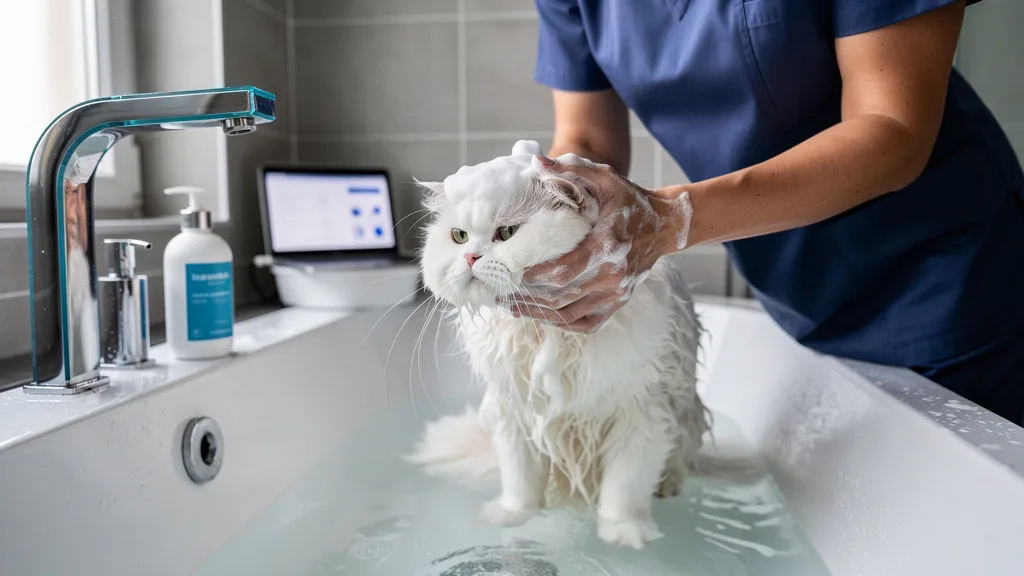
A proper bath involves careful technique and cat-specific products.
Choosing the right brush is critical for managing your cat’s specific fur. A short-haired cat may only need a rubber curry brush and a fine-toothed comb, but a long-haired breed like a Persian or Maine Coon will require a more extensive set to prevent matting. Using the wrong tool can be ineffective at best and painful or damaging at worst. The table below outlines the best brushes for common coat types.
Brush and Comb Recommendations for Cat Coat Types
Coat Type
Primary Brush/Comb
Secondary Tool
Purpose
Short Hair (e.g., Siamese, British Shorthair)
Rubber Curry Brush
Fine-Toothed Comb
Removes loose fur, stimulates skin, checks for fleas.
Medium Hair (e.g., Ragdoll, American Shorthair)
Slicker Brush
Greyhound Comb
Detangles, removes undercoat, ensures no knots remain.
Long Hair (e.g., Persian, Maine Coon)
Undercoat Rake
Slicker Brush & Greyhound Comb
Penetrates deep to remove dead undercoat and prevent mats.
Beyond the Brush: Clippers, Shears, and Thinners
For more advanced grooming, you may need cutting tools. High-quality clippers are necessary for sanitary trims or carefully removing severe mats that cannot be brushed out. When selecting clippers, look for a quiet model with a cool-running blade to minimize stress and prevent clipper burn on your cat’s sensitive skin. Always use a guard to avoid cutting the skin. Cat Kidney Disease Stage 1.
Shears and thinning scissors are used for shaping and styling, particularly for show cats. Straight shears can be used to neaten up feathering on the legs and tail, while thinning shears help blend different lengths of fur and reduce bulk without creating harsh lines. These tools require skill and a steady hand; improper use can easily result in injury. Practice on less visible areas first or seek guidance from a professional groomer.
Choosing Shampoos, Conditioners, and Finishing Sprays
The products you use during a bath are just as important as your brushing technique. Always use shampoos and conditioners specifically formulated for cats. Human products have the wrong pH balance and can strip the natural oils from your cat’s skin, leading to dryness, irritation, and a dull coat. Look for gentle, soap-free formulas, and consider a whitening shampoo for light-colored cats or a texturizing one for breeds that require more volume.
A high-quality conditioner is not an optional step. It helps to rehydrate the skin and fur after shampooing, smooth the hair cuticle for extra shine, and reduce static. For the final touch, a finishing spray can add gloss, control flyaways, and help repel dirt between baths. Choose a light, non-oily spray to avoid weighing down the coat.
The Advanced Grooming Process: A Step-by-Step Guide
A show-quality groom is a systematic process, not a single event. Each step builds upon the last to create a polished, flawless result. Rushing through or skipping steps will compromise the final look and can cause stress for your cat. By following a structured approach, you ensure every part of the coat receives the attention it needs.
Pre-Grooming Preparation and Deshedding
Before any water touches your cat, a thorough brush-out is mandatory. Water will tighten any existing knots or mats, making them impossible to remove without cutting. Use your slicker brush and undercoat rake to work through the entire coat, removing all loose fur and tangles. This step, known as deshedding, is the most critical part of mat prevention. It also aerates the coat and prepares it for a more effective wash.
“Patience is the most valuable tool in your grooming kit. A calm and trusting cat is far easier to groom than a frightened one. Taking the time to build a positive association with grooming will pay dividends for years to come.” Why Is My Cat Sneezing.
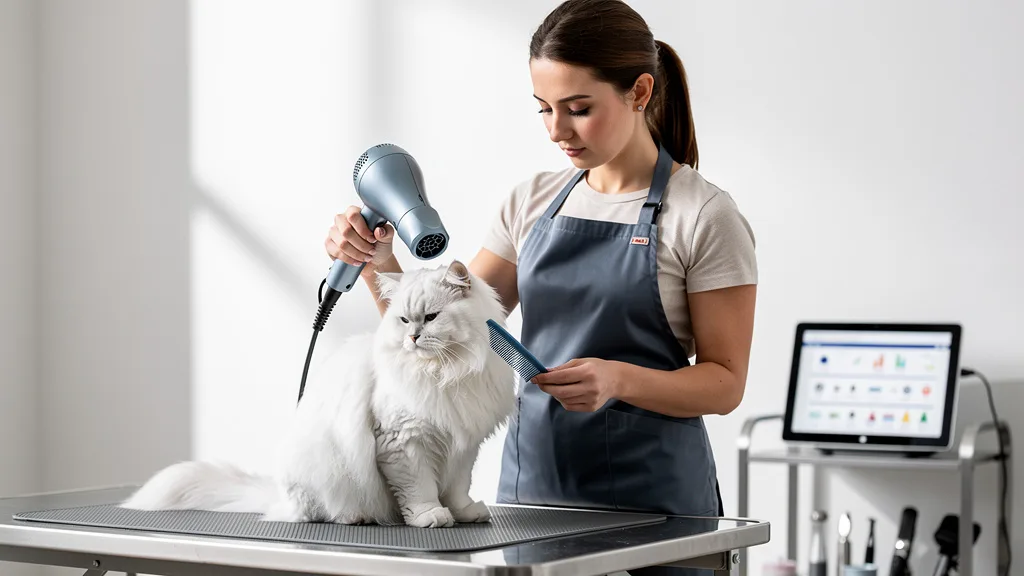
Safe blow-drying techniques are crucial for achieving a voluminous, show-ready finish.
Preparation also involves creating a calm environment. Gather all your tools, shampoos, and towels beforehand so you are not scrambling mid-bath. A non-slip mat in the tub or sink can help your cat feel more secure. Some groomers play soft music or use feline pheromone diffusers to create a relaxing atmosphere.
Mastering the Art of the Cat Bath
Bathing a cat can be challenging, but it’s essential for a truly clean, show-ready coat. Use lukewarm water, as water that is too hot or cold will be uncomfortable. Wet the coat thoroughly, avoiding the head and ears, and apply the cat shampoo. Lather gently, working in the direction of hair growth. Pay special attention to greasy areas like the base of the tail.
Rinsing is arguably the most important part of the bath. Any shampoo or conditioner residue left in the coat will attract dirt, weigh down the fur, and can cause skin irritation. Rinse until the water runs completely clear and the fur feels squeaky clean. For long-haired cats, this may take several minutes. After the final rinse, gently squeeze excess water from the coat before wrapping your cat in a towel.
Safe and Effective Drying Techniques
Proper drying is what separates a good groom from a great one. The goal is to dry the coat completely while adding volume and smoothness. Start by blotting the fur with a highly absorbent towel. Never rub vigorously, as this can cause tangles and hair breakage. You may need to use several towels for a long-haired cat. complete cat nutrition guide.
For a show finish, a blow dryer is necessary. Use a forced-air dryer designed for pets, as human dryers can get too hot and burn a cat’s skin. Keep the dryer on a low or medium heat setting and constantly move it to distribute the air and heat evenly. As you dry, brush the fur in the opposite direction of its growth to create volume and ensure every layer gets dry. This process, known as fluff drying, is key to achieving a full, plush look. This is a critical step to prevent injuries from heat or improper technique.
Finishing Touches for a Polished Look
Once the coat is completely dry, the final stage begins. Use your steel greyhound comb to do a final pass through the entire coat, ensuring there are absolutely no tangles from root to tip. This comb-out will also help align the hairs for a smooth, sleek finish. At this stage, you can trim nails, clean ears, and apply any necessary sanitary trims with clippers.
Finally, apply a light mist of a finishing or anti-static spray to add shine and manage flyaways. For some breeds, a tiny amount of grooming powder at the roots can add extra volume. Step back and admire your work. For more ideas and to see how other enthusiasts prepare, you can find cat grooming tips and best practices for show condition shared within hobbyist communities.
Techniques for Specific Coat Goals and Challenges
Every cat’s coat is unique, and sometimes you need to tailor your approach to address specific challenges or achieve a certain look. Whether you’re fighting persistent mats or aiming for that extra bit of shine, targeted techniques can make all the difference. These methods build on the foundational grooming process to solve common problems.
How to Get a Perfectly Shiny Coat
A glossy, shimmering coat is a sign of peak health and meticulous grooming. The first step, as mentioned, is diet; omega fatty acid supplements can dramatically increase shine. During grooming, the key is a thorough rinse. Any leftover product will dull the fur. Using a quality conditioner helps to smooth the hair cuticles, which allows them to reflect more light.
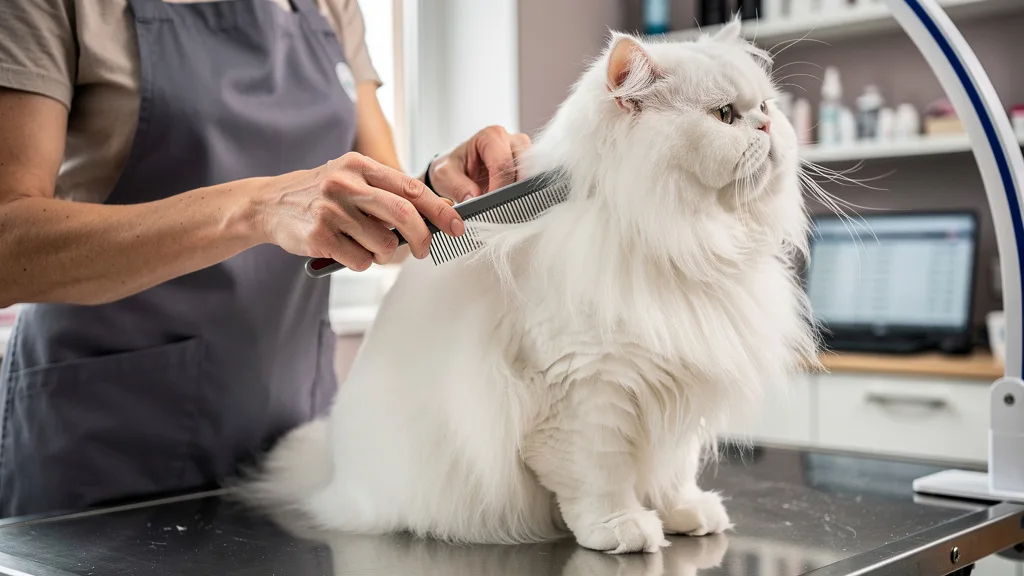
Daily combing is essential for preventing mats in long-haired cats.
The final comb-out also plays a role. By ensuring every hair is aligned and tangle-free, you create a smoother surface. A light mist of a silicone-based finishing spray can provide an instant, camera-ready gloss, but use it sparingly. Too much can make the coat look greasy. The combination of internal health and external polishing is what creates that perfect shine.
The Best Way to Groom a Long-Haired Cat
Grooming a long-haired cat is a significant commitment. The number one rule is consistency. Daily brushing is not optional; it is essential to prevent mats from forming in the dense undercoat. An undercoat rake is the best tool to start with, as it penetrates deep to remove dead fur. Follow this with a slicker brush and finish with a greyhound comb to catch any remaining tangles.
Pay special attention to friction areas like behind the ears, under the legs (in the ‘armpits’), and on the belly, as this is where mats form first. Regular bathing is also more important for long-haired breeds, as their coats can collect more dirt and oil. The techniques for bathing and drying are the same, but the process will take significantly longer.
Managing Mats and Tangles Without Injury
Mats are more than a cosmetic issue; they can be painful and lead to skin infections by trapping moisture and debris. Small tangles can often be worked out gently with your fingers or the end of a greyhound comb. You can use a bit of cornstarch or a detangling spray to help loosen the knot. Always hold the fur at the base, against the skin, while you work on the tangle to prevent pulling on the sensitive skin underneath.
For large, tight mats, never try to cut them out with scissors. It is incredibly easy to cut the skin, which is often pulled up into the base of the mat. Severe matting is a job for a professional groomer or a veterinarian, who can safely shave the mat off with clippers. The best approach is always prevention through consistent daily brushing.
Grooming Do’s and Don’ts to Prevent Injuries
Safety should always be your top priority during any grooming session. A cat’s skin is thin and delicate, and a calm, positive experience is crucial for long-term success. Following a few key rules can help you avoid common mistakes and prevent injuries, ensuring grooming is a pleasant bonding activity rather than a stressful event.
The Do’s: Standards That Protect Your Cat
Adhering to best practices is the best way to keep your cat safe and comfortable. These guidelines are followed by professional groomers to ensure positive outcomes and are easy to implement at home.
Do use tools designed for your cat’s specific coat type.
Do brush your cat completely before a bath to remove all mats and tangles.
Do keep grooming sessions short and positive, ending on a good note with praise and a treat.
Do check the temperature of clippers and blow dryers frequently to prevent burns.
Do hold the fur at the base when brushing out a tangle to avoid pulling the skin.
Do regularly inspect the skin underneath the fur for any redness, lumps, or signs of parasites.
Do consult authoritative resources like the ASPCA for foundational Cat Grooming Tips to reinforce good habits.
The Don’ts: Common Mistakes That Create Risk
Avoiding a few common pitfalls can make a huge difference in your cat’s safety and comfort level. Many grooming injuries and bad outcomes are entirely preventable by knowing what not to do.
Don’t ever use human shampoo, conditioner, or other hair products.
Don’t try to cut out mats with scissors; use clippers or see a professional.
Don’t pull on mats, as this is painful and can tear the skin.
Don’t ignore signs of stress or fear, such as hissing, growling, or frantic movements. If your cat is distressed, it’s time to stop. This can also help you understand behavioral cues, like when a cat might bite, which we cover in our guide on why cats bite.
Don’t point a blow dryer directly at your cat’s face or hold it in one spot for too long.
Don’t rush the process. Patience is essential for a safe and successful groom.
Key Takeaways
Achieving a show-quality coat is a marathon, not a sprint. It requires dedication to a holistic approach that combines nutrition, the right tools, and expert technique. Here are the most critical takeaways from our guide to help you on your journey:
Health First: A beautiful coat starts from within. A diet rich in protein and omega fatty acids is the foundation for healthy skin and fur.
Invest in Your Toolkit: Professional-grade, cat-specific tools are not a luxury; they are essential for safety and effectiveness. Use the right brush for your cat’s coat type.
Process is Everything: Follow a structured grooming process: always brush before bathing, rinse shampoo and conditioner thoroughly, and dry completely with safe techniques.
Prevention Over Correction: Daily brushing is the single best way to prevent painful mats, especially for long-haired cats. It’s easier to prevent a mat than to remove one.
Safety is Paramount: Never use human products, avoid using scissors on mats, and always pay attention to your cat’s body language to prevent stress and injury.
Frequently Asked Questions
How can I improve my cat’s fur quality quickly?
For a fast improvement, focus on both internal and external factors. Immediately switch to a high-protein diet and consider adding an omega-3 fatty acid supplement, like fish oil. Externally, use a high-quality, moisturizing cat conditioner after a bath and rinse it out completely. A light finishing spray can add instant shine for a temporary boost while the dietary changes take effect over the next few weeks.
What is the 3-3-3 rule for cats?
The 3-3-3 rule is a guideline for helping a new rescue cat acclimate to your home. It’s not related to grooming but is a key concept in cat care. It suggests a cat may take 3 days to decompress and hide, 3 weeks to start exploring and learning routines, and 3 months to feel fully comfortable and at home. Understanding this timeline helps set realistic expectations for a new pet’s behavior.
How often should I groom my cat for a show coat?
For a show-quality coat, grooming should be a daily habit. Long-haired cats require daily brushing to prevent mats, while short-haired cats benefit from brushing several times a week to distribute oils and remove loose fur. Bathing frequency depends on the breed and individual cat, ranging from weekly to monthly, but a full bath is typically done a day or two before a show.
What is the difference between regular grooming and show grooming?
Regular grooming focuses on basic health and maintenance: keeping the cat clean, comfortable, and free of mats. Show grooming is about perfection and presentation. It involves more advanced techniques like fluff drying for volume, using products to enhance texture and shine, and precision styling to meet specific breed standards. The level of detail and time commitment is significantly higher for show grooming.
Can I use human shampoo on my cat?
No, you should never use human shampoo on your cat. Human skin has a different pH level than a cat’s skin. Human shampoos are formulated for our more acidic skin and can strip the natural, protective oils from your cat’s coat. This can lead to dry, flaky, irritated skin and a dull, brittle coat. Always use a shampoo specifically formulated to be pH-balanced for felines.
Conclusion
Transforming your cat’s coat from standard to stunning is an achievable goal that deepens the bond you share. As we’ve explored, these advanced cat grooming tips reveal that a show-quality coat is the ultimate expression of your cat’s health and your dedicated care. It’s not about a single magic product but a consistent commitment to a holistic system encompassing diet, specialized tools, and precise techniques.
The most important takeaways are to build from the inside out with excellent nutrition and to master a safe, step-by-step grooming process. By learning to properly brush, bathe, and dry your cat, you can prevent painful mats and skin issues while creating a beautiful finish. Remember that patience and a focus on your cat’s comfort are the keys to making grooming a positive experience for both of you.
While this guide provides the roadmap, putting these techniques into practice can feel daunting. If you’re looking for more personalized advice or have questions about your cat’s specific needs, our team is here to help. We offer simple, practical tips to help you provide the best care for your feline friend. Explore our resources to build your confidence and become the expert your cat deserves. To learn more, Get started with our community today.